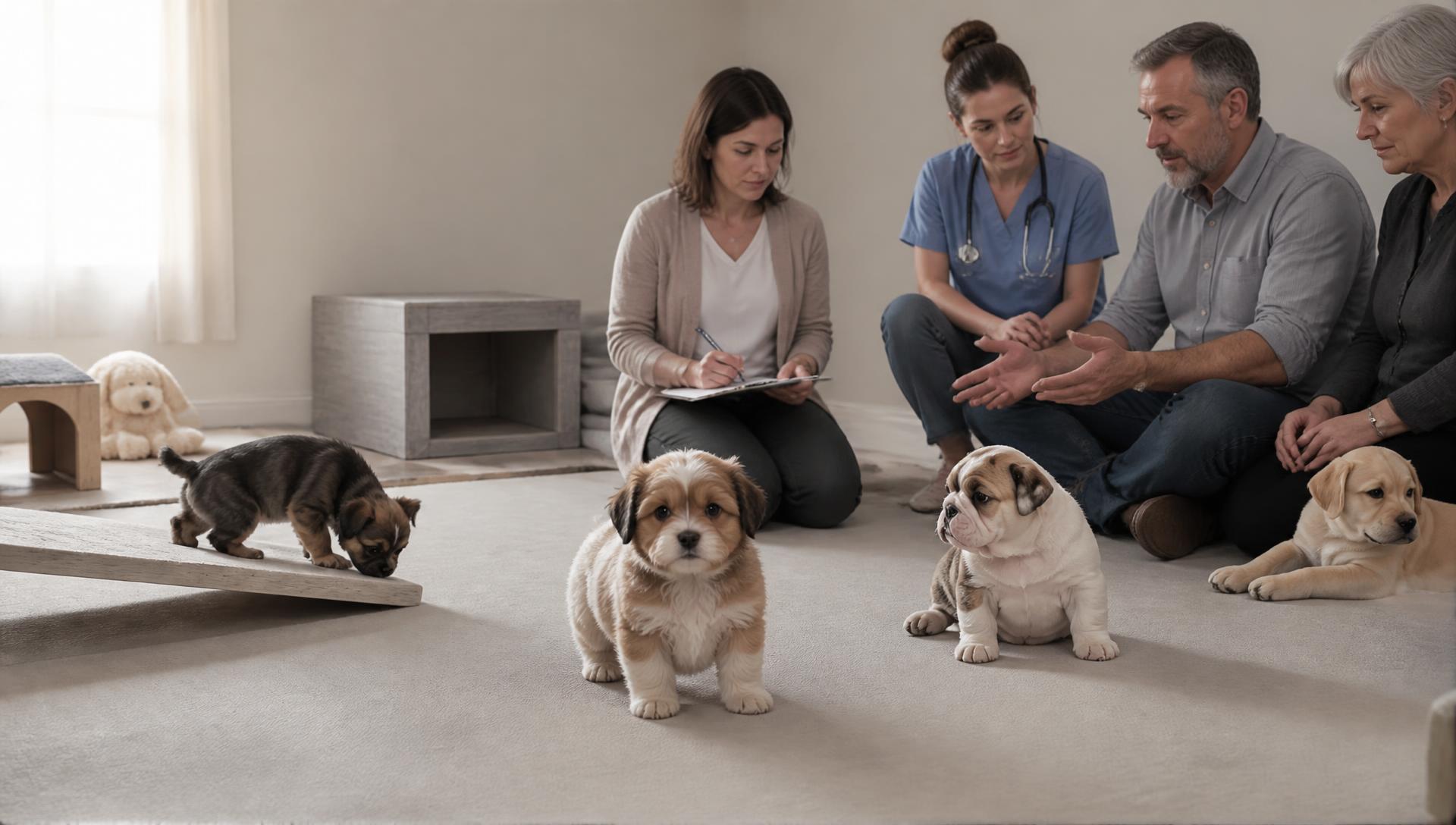
Every Puppy Deserves An Individual Plan.
No two puppies develop exactly alike. No two families have exactly the same needs. No two future working dogs will ever perform exactly the same role.
Therefore... Brain First Development™ believes no two developmental plans should ever be identical.
We Follow Development... Not Calendars
A calendar can tell you how long a puppy has been alive. It cannot tell you whether that puppy is ready. Age is one piece of information. Development is the deciding factor.
Within the Brain First Development™ philosophy, future working dogs are never considered for transition before a minimum of sixteen weeks of age. Sixteen weeks is not a guaranteed transition date. It is simply the earliest developmental review point.
Some puppies are ready soon after. Others benefit from additional weeks or months of carefully guided development. Every recommendation is based upon what gives that individual puppy the greatest opportunity for lifelong success.
The date arrives
- The week on the schedule decides the outcome.
- Every puppy in the litter is treated as one puppy.
- Unfinished development travels home unnoticed.
- Difficulties appear later, and no one knows where they began.
The puppy is ready
- Sixteen weeks opens a review... it does not close one.
- Each puppy is evaluated as an individual with an individual future.
- Gaps are supported before they become habits.
- The transition happens when it protects the puppy's lifetime.
“We never graduate puppies because of their age. We transition puppies because of their development.”
Every Puppy Is Different
A developmental recommendation is never built from a single observation. Select any factor below to see what we are actually watching... and notice how often one factor explains another.
Emotional development
How the puppy processes novelty, pressure and quiet. Emotional maturity rarely arrives on the same week for two littermates.
Physical development
Growth, coordination, structure and stamina. A body still catching up to a curious brain changes what a puppy should be asked to do.
Confidence
Whether the puppy chooses to investigate, hesitate or withdraw... and whether that choice is stable across new places and new people.
Recovery after stress
Not whether a puppy is ever startled, but how quickly and how completely the puppy returns to comfortable. Recovery predicts far more than reaction.
Health
Veterinary findings, pain, growth concerns, digestion, sleep quality and anything else that quietly shapes behavior from underneath.
Breed-specific considerations
Shih Tzu, Olde English Bulldogge, French Bulldog, Labrador Retriever, Golden Retriever and other breeds each carry different developmental rhythms and different needs.
Learning style
Some puppies learn by watching. Some learn by trying. Some need repetition, and some need space between repetitions to consolidate.
Environmental adaptability
How a puppy transfers what has been learned into unfamiliar surfaces, sounds, buildings, weather and crowds.
Household environment
Children, other animals, noise levels, schedules, stairs, travel and daily rhythm all become part of the developmental plan.
Family goals
What the family genuinely needs from this relationship... and what they realistically have the time and support to continue.
Future responsibilities
A beloved family dog, a therapy dog, a facility dog, an emotional support dog and a service dog do not carry the same lifelong load.
None of these factors live alone. Health changes confidence. Confidence changes recovery. Recovery changes learning. Learning changes what a household experiences every day.
Collaboration Creates Better Decisions
Brain First Development™ values collaborative expertise, because no single person possesses every answer. Humility is part of the method.
Depending upon the puppy, the breed, health considerations and the intended future role, recommendations may include input from professionals with expertise relevant to that individual situation.
Not every puppy requires every specialist. The team is assembled according to the puppy's individual needs and intended future... and collaboration protects puppies by bringing together the knowledge most relevant to each decision.
Responsible breeders
The people who know the pedigree, the litter, the mother and the earliest days no one else observed.
Veterinarians and veterinary specialists
Health, growth, orthopedic and airway considerations, pain and anything medical that could shape behavior or workload.
Behavior professionals
Emotional development, stress recovery, learning history and behavior that deserves interpretation rather than correction.
Breed, genetic and nutrition specialists
Breed-typical development, inherited tendencies and the nutritional foundation supporting a growing brain and body.
Physicians, psychologists, psychiatrists and therapists
When a dog is intended to support a person, the professionals who understand that person's needs help define what the dog must be able to do.
Educators and facility representatives
Schools, clinics, courthouses, libraries and care facilities each have real environments and real expectations worth understanding in advance.
Experienced working-dog professionals
People who have watched many dogs grow into demanding roles... and who know what early development tends to predict.
How A Recommendation Is Reached
- 01
Observe before influencing
Development is documented over time rather than judged in a single session. Patterns matter more than moments.
- 02
Gather the whole picture
Health, emotional development, physical development, learning style, breed considerations, household and intended role are reviewed together, never one at a time.
- 03
Assemble the right team
The professionals most qualified for this specific puppy and this specific future are invited into the conversation.
- 04
Ask the deciding question
What gives this puppy the greatest opportunity to thrive? Every recommendation must answer that question honestly.
- 05
Recommend, then keep watching
A recommendation is a checkpoint, not a verdict. Development continues, and so does the review.
Why We Are Careful
Many working-dog programs experience significant prospect attrition, because not every puppy ultimately develops into the right match for every role. That is not a failure of the puppies. It is a reflection of how demanding those roles truly are.
Brain First Development™ was created to work toward improving those outcomes by placing extraordinary emphasis on early brain and emotional development, individualized decision making and collaboration among qualified professionals.
Success is measured not by how quickly puppies go home... but by how successfully they thrive throughout their lives. No program can promise certainty, and we do not pretend otherwise. What we can promise is care taken seriously.
Time is not wasted time
Additional developmental weeks are an investment in a decade of partnership.
Roles differ honestly
A wonderful family dog and a working service dog require different things. Both outcomes are respected.
No guarantees offered
We describe what we observe and what we recommend, never what we cannot know.
A Thoughtful Transition
Transitioning to a forever family is one of the most important developmental decisions a puppy will ever experience. Home, sounds, people, routine and expectations all change at once.
Brain First prepares both sides of that moment. The puppy rehearses change gently, and the family learns exactly where development stands and how to keep building it.
The goal is not simply to send a puppy home... the goal is to prepare both partners for a lifetime together.
Preparing the puppy
Familiar routines, sleep, handling, travel, surfaces and separation are rehearsed gently so the change feels survivable rather than sudden.
Preparing the family
Families learn what their puppy already understands, what is still developing and how to keep building it in an ordinary week at home.
Preparing the communication
Questions are expected after homecoming. Support continues, because the first weeks at home are developmental weeks too.
Preparing for the lifetime
The goal is not a smooth first day. The goal is a partnership that still works in year one, year five and year ten.
Every Recommendation Asks One Question
“What gives this puppy the greatest opportunity to thrive?”
the puppy stays another week.
the puppy stays another month.
that support is provided before transition.
Because Brain First Development™ believes that protecting a puppy's future is more important than meeting a calendar.
We don't make decisions because they're easy. We make them because the puppy deserves them.
The Brain First Promise
Every philosophy is ultimately measured by the promises it is willing to keep. The final page in the Brain First educational series describes those promises plainly... to puppies, to families, to breeders and to the professionals who trust this work.
The Calendar Never Decides. The Puppy Does.
Questions about developmental readiness, puppy development, service dogs, therapy dogs, facility dogs, emotional support dogs, responsible breeding or our connected learning pages are always welcome.
“Develop the brain... and behavior follows.”