Family story
Coming soon
A family's developmental journey from first week home through social maturity.
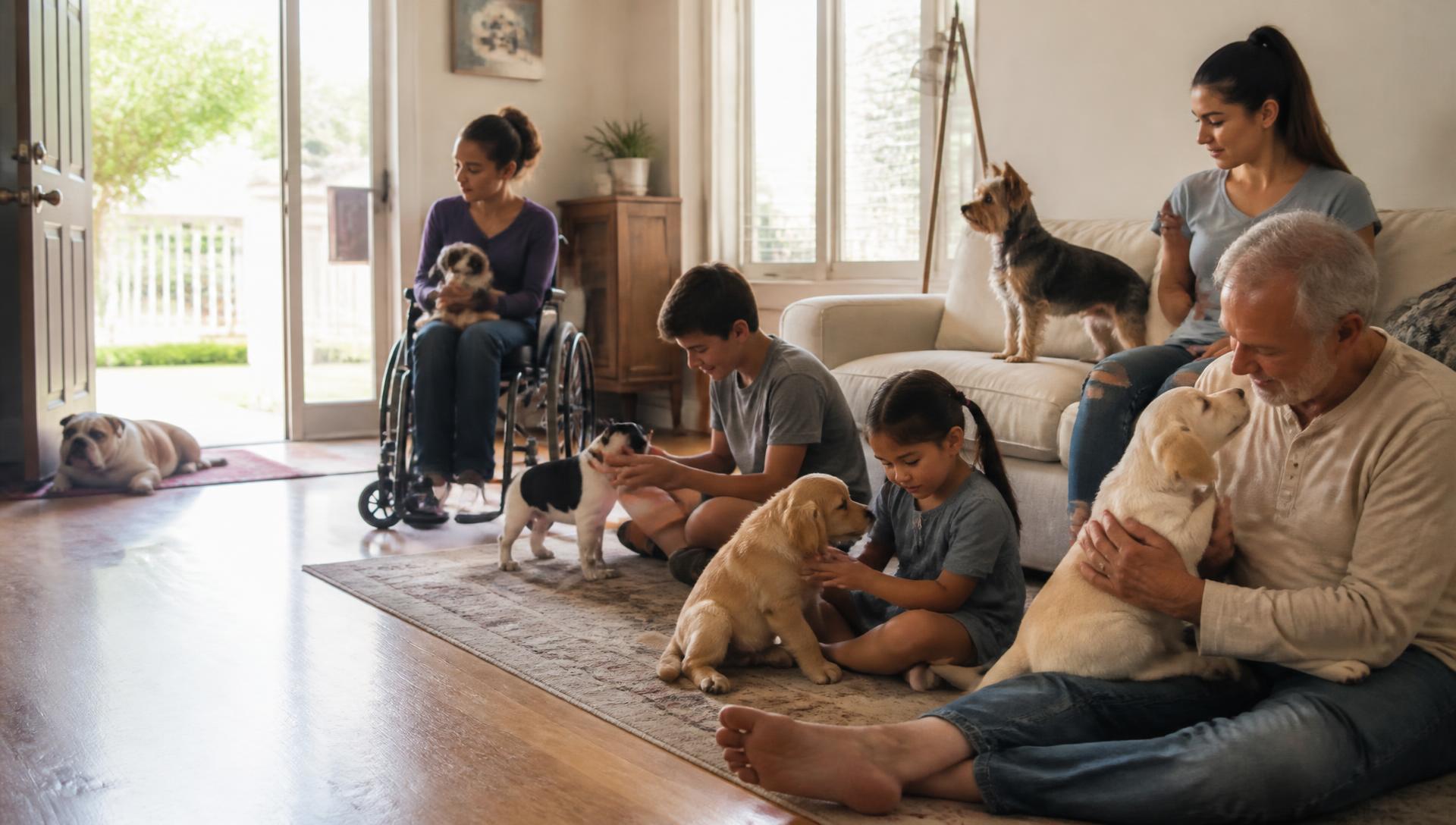
No professional, regardless of experience or credentials, spends more time with a dog than the family who loves them. Trainers see hours. Families live the years.
That is not a burden... it is an honor. Families shape development every single day, in the most ordinary moments imaginable.
Puppies are always learning. There is no on switch and no off switch... only a developing brain gathering information about how the world tends to work.
They learn from routines and from environments. They learn from relationships. They learn from stress and, just as importantly, from recovery. They learn from safety and from consistency.
This is wonderful news for families, because it means development does not require perfect sessions or specialized equipment. It requires ordinary days lived with a little intention.
Predictable rhythms teach a brain what to expect... and expectation is where calm begins.
Floors, sounds, doorways, weather and household traffic quietly teach every single day.
Who is safe, who is playful, who listens... relationships become the map of a dog's world.
Small, manageable stress builds capacity. What matters most is what happens next.
Rest is where learning consolidates. A tired brain cannot build what a rested brain can.
A puppy who feels safe can be curious. Curiosity is the doorway to development.
Consistency is kindness. It removes guesswork and lets confidence grow.
Nothing here looks like training. All of it is development.
What it teaches... Transitions, bladder rhythm, greeting the world without urgency.
What it teaches... Patience, positive anticipation, gut health and steady energy.
What it teaches... Problem solving, body awareness, arousal that rises and comes back down.
What it teaches... Recovery, memory consolidation, emotional regulation.
What it teaches... Settling near activity, social confidence, belonging.
What it teaches... Security, independence, a nervous system that fully rests.
Brain First Development™ is not something professionals do to dogs. It is something families and professionals build together, in the living room and the back yard and the hallway at six in the morning.
Open any card below to see how an ordinary part of family life becomes developmental support.
Predictability is the foundation of confidence.
A puppy who can predict the shape of the day spends less energy scanning and more energy learning. Routines do not need to be rigid... they simply need to be recognizable.
Growing brains need far more rest than most families expect.
Young puppies may need eighteen or more hours of sleep. Overtired puppies look wild, mouthy and unable to listen. Protecting sleep resolves more behavior than almost anything else.
Food is the raw material of brain development.
Steady nutrition supports growth, energy regulation, gut comfort and focus. What goes in shapes how a body feels... and how a body feels shapes what a brain can do.
Play is thinking in motion.
Through play a puppy practices problem solving, impulse control, coordination and social negotiation. Brain First games turn ordinary play into developmental work that feels like joy.
Curiosity is a skill that grows with practice.
New surfaces, smells and small novelties build flexible thinking, as long as the puppy is allowed to approach at their own pace and leave whenever they choose.
Safety comes before performance.
A brain in survival mode cannot take in information. Emotional safety is not indulgence... it is the condition that makes learning physically possible.
What happens after excitement matters more than the excitement itself.
Families who help a puppy come back down after arousal are teaching regulation. That single skill supports every future context, from vet visits to public places.
Trust is built in small, repeated moments.
Every gentle handling session, every honored 'no thank you', every predictable response deposits into a relationship the dog will draw on for life.
Listening is half of training.
Dogs communicate constantly through posture, pace, breathing and choice. Families who learn to read those signals respond earlier... and rarely need to correct later.
Agreement inside the household is a developmental tool.
When everyone in the home responds in a similar way, the puppy stops testing and starts trusting. Consistency lowers stress for dogs and people alike.
No family is expected to become an expert overnight. That has never been the goal, and it is not how development works for anyone... dog or human.
Brain First Development™ exists to guide families through each developmental stage as it arrives, so the right information shows up at the moment it is actually useful.
Asking questions is encouraged, always. Learning never stops... professionals continue learning too, and the best outcomes come from people willing to keep asking together.
Brain First Development™ walks families through each developmental stage rather than handing over a checklist and stepping away.
There is no such thing as a question that is too small. Early questions prevent later difficulty, and asking is a sign of good partnership.
Professionals continue studying too. Development research keeps growing, and so does everyone who works within it.
Professionals bring developmental knowledge. Families bring daily observation of the dog nobody else knows as well. Both are required.
Development succeeds when professionals and families become partners.
A puppy spends a short time with professionals... and a lifetime with their family. Weeks of careful early development are real and valuable, but they are a beginning rather than a destination.
Because of this, helping families build the right environment becomes just as important as helping the puppy develop. The home is the classroom that never closes.
Weeks of assessment, guidance, foundation and preparation.
Years of routines, relationships, recovery and everyday teaching.
Confidence, regulation and understanding that continue growing for life.
Our proudest outcomes are not ribbons or titles. They are families who learned to read their dog, and dogs who learned to trust their people. This space is reserved for those journeys as they are shared with us over time.
A family's developmental journey from first week home through social maturity.
How a home environment supported a service dog candidate through adolescence.
A therapy dog team sharing what daily practice looked like at home.
A first-time puppy family describing what surprised them most.
Grandparents, children and a puppy learning one another's rhythms.
Families are welcome to share their developmental journey with us at any time.
Brain First Development™ is about growing together rather than achieving perfection. Families do not need flawless timing, encyclopedic knowledge or a spotless record of good decisions.
They simply need to remain curious, compassionate and willing to keep learning alongside their dog. That willingness, repeated quietly over years, outperforms perfection every time.
The strongest partnerships are built one ordinary day at a time.
Yes. No professional spends more hours with a dog than the family who lives with them. Daily routines, sleep, meals, play and emotional safety shape the developing brain every single day.
No. Families are never expected to become experts overnight. Brain First Development™ guides families stage by stage, answering questions as they arise and adjusting as the puppy grows.
A puppy spends a short season with professionals and a lifetime with their family. The home... its routines, relationships, predictability and recovery time... becomes the environment that shapes development for years.
Waking, eating, resting, greeting, exploring and settling all teach the brain something. Development is not a class on the calendar. It is the accumulated meaning of ordinary days.
Mistakes are part of learning for dogs and people alike. Brain First Development™ is about growing together rather than achieving perfection.
Yes. Family partnership is one of the strongest predictors of success for service dogs, therapy dogs, emotional support dogs and facility dogs.
Once families understand how profoundly development shapes lifelong success, the next question arrives naturally... why do some developmental periods matter more than others?
The next chapter explains why certain early weeks carry so much weight, and what additional developmental time makes possible for family companions, service dogs, therapy dogs, emotional support dogs and facility dogs alike.
They are partners in creating it. Questions about puppy development, family education, service dog preparation, therapy dog work or our connected learning pages are always welcome.
“Develop the brain... and behavior follows.”